This site is intended for US Healthcare Professionals

Roland is a real VILTEPSO patient and compensated spokesperson.


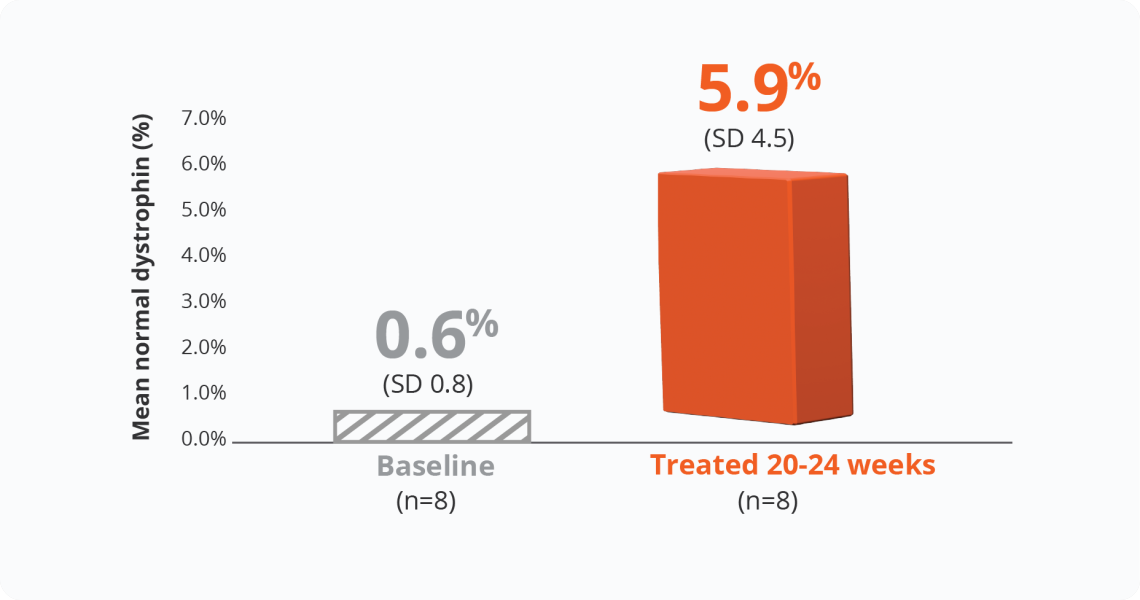
Key finding
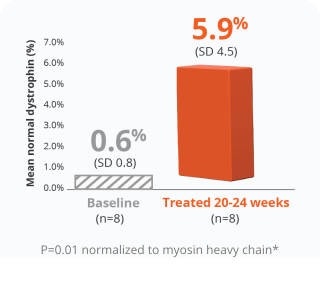
VILTEPSO increased dystrophin levels to nearly 6% of normal
*P-value for change from baseline at week 25 was statistically significant.
A 2-period, randomized, double-blind, placebo-controlled, dose-finding study, with ambulant males aged 4 to <10 years with a confirmed mutation of the DMD gene amenable to exon 53 skipping who were receiving a stable dose of corticosteroids for ≥3 months (N=16). Patients received a once-weekly infusion of 40 or 80 mg/kg VILTEPSO or placebo for a 4-week safety period followed by a 20-week open-label study to assess the efficacy and safety of VILTEPSO. After completion of the 24-week study, patients could enroll in up to a 192-week extension study with efficacy assessments conducted every 12 weeks. Patients were required to remain on a stable dose of glucocorticoids for the duration of the study.
Note: the only FDA-approved dose of VILTEPSO is 80 mg/kg/wk.
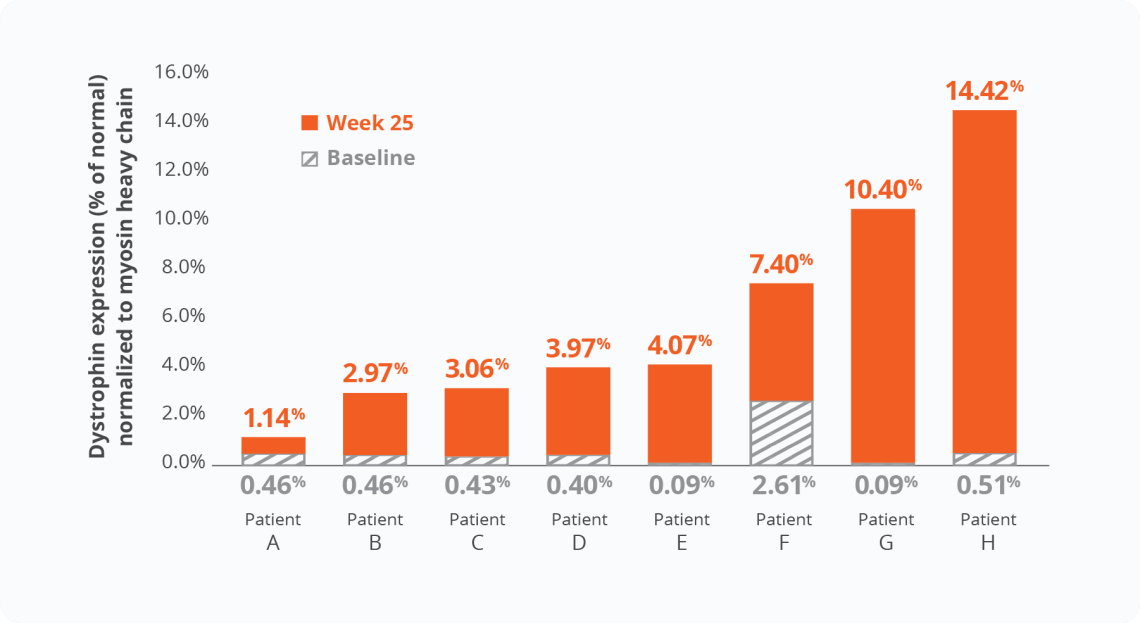
Key finding
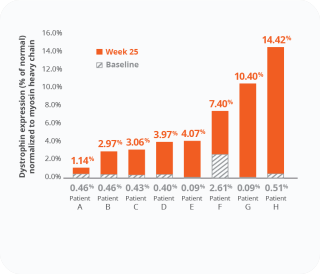
100% of patients showed an increase in dystrophin levels with VILTEPSO
| Secondary endpoint | DNHS-mean change from baseline at week 25 (n=65)† | VILTEPSO-mean change from baseline at week 25 (n=8) |
|---|---|---|
| Time to stand (seconds)§ | 0.66 | -0.44 |
| Time to climb 4 stairs (seconds)§ | 0.15 | 0.00 |
| Time to run/walk 10 meters (seconds)§ | 0.08 | -0.66 |
| 6-minute walk test‖ meters | -65.3 | 44.0 |
| North Star Ambulatory Assessment¶ | -1.1 | 1.1 |
†The control subjects for this trial were matched for age and corticosteroids from the CINRG DNHS registry. §Negative time means less time; positive time means more time. ‖Negative number means less distance traveled; positive number means greater distance traveled. ¶NSAA is a validated clinical tool that uses 17 physical tests to evaluate motor function in ambulant DMD patients and document their response to DMD therapy in a clinical trial. Negative number means a lower score relative to baseline; positive number means a higher score relative to baseline. CINRG=Cooperative International Neuromuscular Research Group; DNHS=Duchenne Natural History Study | ||
Functional tests were compared to Duchenne natural history data as the control group rather than to placebo. Functional data are not in the US Prescribing Information.
Adverse reactions reported in ≥10% of DMD patients treated with VILTEPSO 80 mg/kg once weekly
In addition to the pivotal 24-week study, this profile includes data from a multicenter, parallel-group, open-label, dose-finding study conducted in Japan in ambulant and non-ambulant males aged 5 to <18 years with a confirmed mutation of the DMD gene amenable to exon 53 skipping. Non-ambulant is defined as patients with a 6-minute walking test distance of <75 meters.
| Adverse Reaction | VILTEPSO (80 mg/kg once weekly) (N=16); n (%) |
|---|---|
| Upper respiratory tract infection* | 10 (63%) |
| Injection site reaction† | 4 (25%) |
| Cough | 3 (19%) |
| Pyrexia | 3 (19%) |
| Contusion | 2 (13%) |
| Arthralgia | 2 (13%) |
| Diarrhea | 2 (13%) |
| Vomiting | 2 (13%) |
| Abdominal pain | 2 (13%) |
| Ejection fraction decreased | 2 (13%) |
| Urticaria | 2 (13%) |
* Upper respiratory tract infection includes the following terms: upper respiratory tract infection, nasopharyngitis, and rhinorrhea. † Injection site reaction includes the following terms: injection site bruising, injection site erythema, injection site reaction, and injection site swelling. | |




Connect with an experienced NS Pharma specialist for more information.
Learn about insurance coverage for VILTEPSO and other forms of assistance.
Learn about prescribing, dosing, and administering VILTEPSO.