Galactic53 Study

A 48-Week Study of VILTEPSO

Clinical data from the first VILTEPSO study to evaluate pulmonary function, as well as the first evaluation of safety and motor function in non-ambulatory DMD patients receiving VILTEPSO.

Diego is a real VILTEPSO patient and compensated spokesperson.

About the Galactic53 Study

Study Snapshot

Icon Microscop

Study Type

Phase 2, multicenter, open-label extension study
Asset 18 1

Population

20 (10 ambulatory, 10 non-ambulatory) males over the age of 8, with DMD amenable to exon 53 skipping
Icon calendar

Duration

48 weeks

An open-label, Phase 2, multicenter study in ambulant and non-ambulant males over the age of 8 with a confirmed mutation of the DMD gene amenable to exon 53 skipping, who were either receiving a stable dose of corticosteroids or not receiving any corticosteroids for ≥3 months (N=20). Participants received a once-weekly infusion of 80 mg/kg VILTEPSO for 48 weeks. VILTEPSO patients were compared to matched controls from the Cooperative International Neuromuscular Research Group (CINRG) Duchenne Natural History Study (DNHS).

Pulmonary Function

Forced Vital Capacity

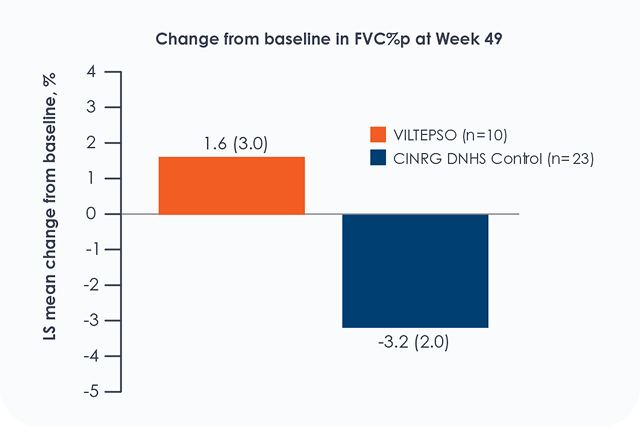
Percent predicted forced vital capacity (FVC%p) was evaluated in ambulatory and non-ambulatory patients.
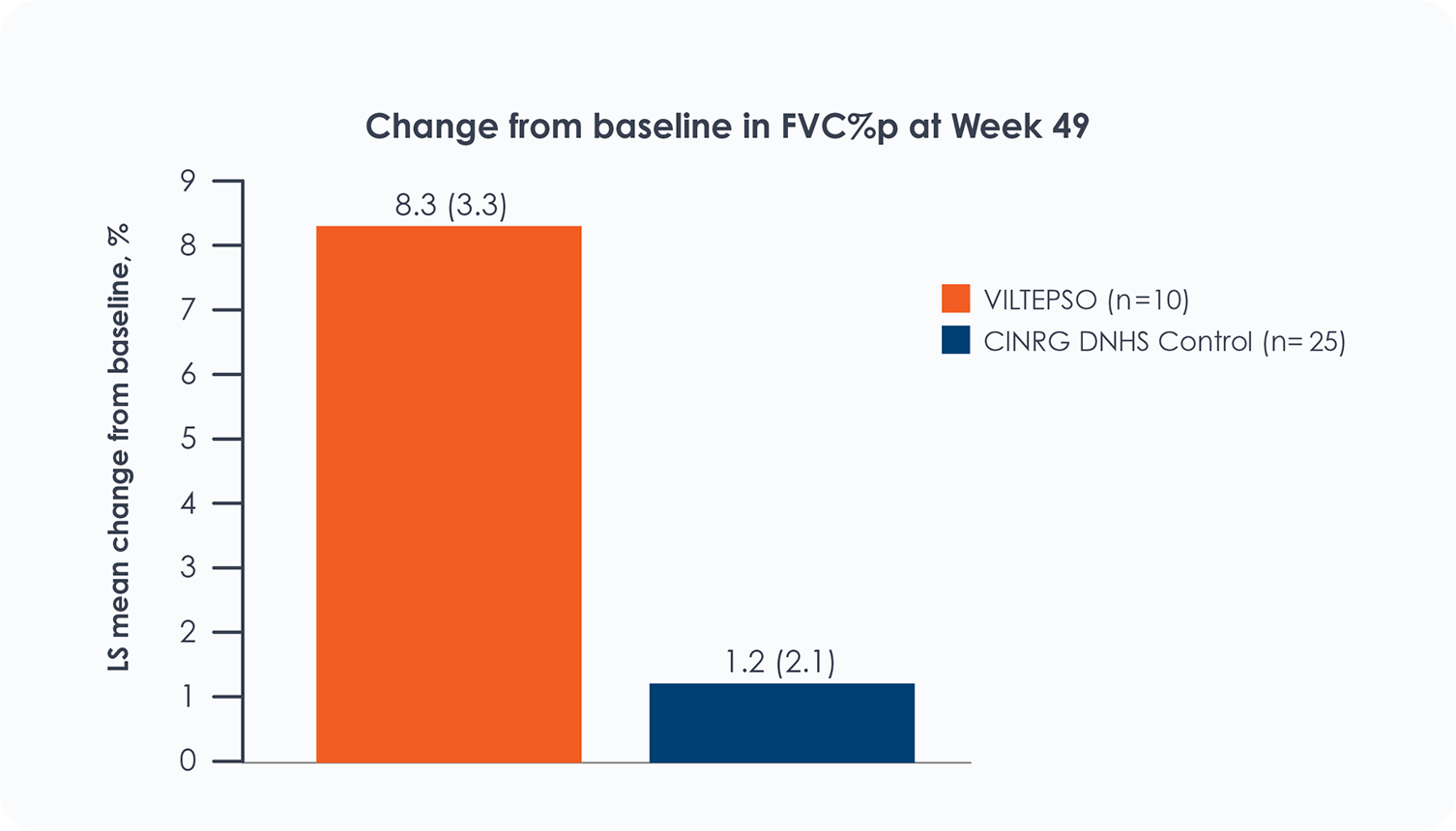
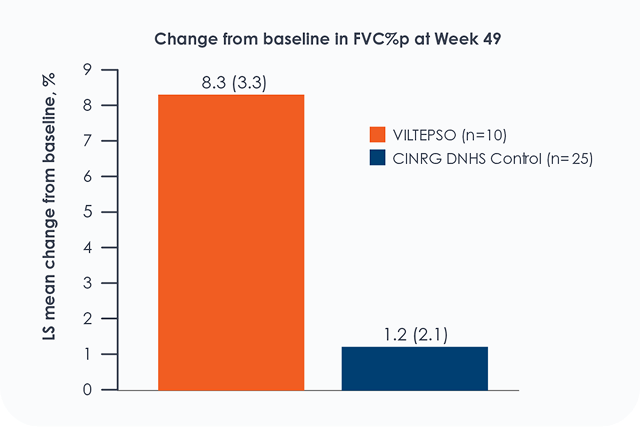
  • Pulmonary tests were compared to Duchenne natural history data as the control group rather than to placebo. Galactic53 study data are not included in the US Prescribing Information.
Line charts showing percent predicted forced vital capacity over time in ambulatory and non-ambulatory DMD patients treated with VILTEPSO (viltolarsen) in the Galactic53 study.
FVC%p is the ratio of an individual’s measured FVC to the average FVC among those with the same gender, height, and weight.

Data presented as LS mean (standard error).
CINRG=Cooperative International Neuromuscular Research Group; DNHS=Duchenne Natural History Study; FVC%p=percent predicted forced vital capacity; LS=least squares.

Motor function

Performance of Upper Limb (PUL 2.0)

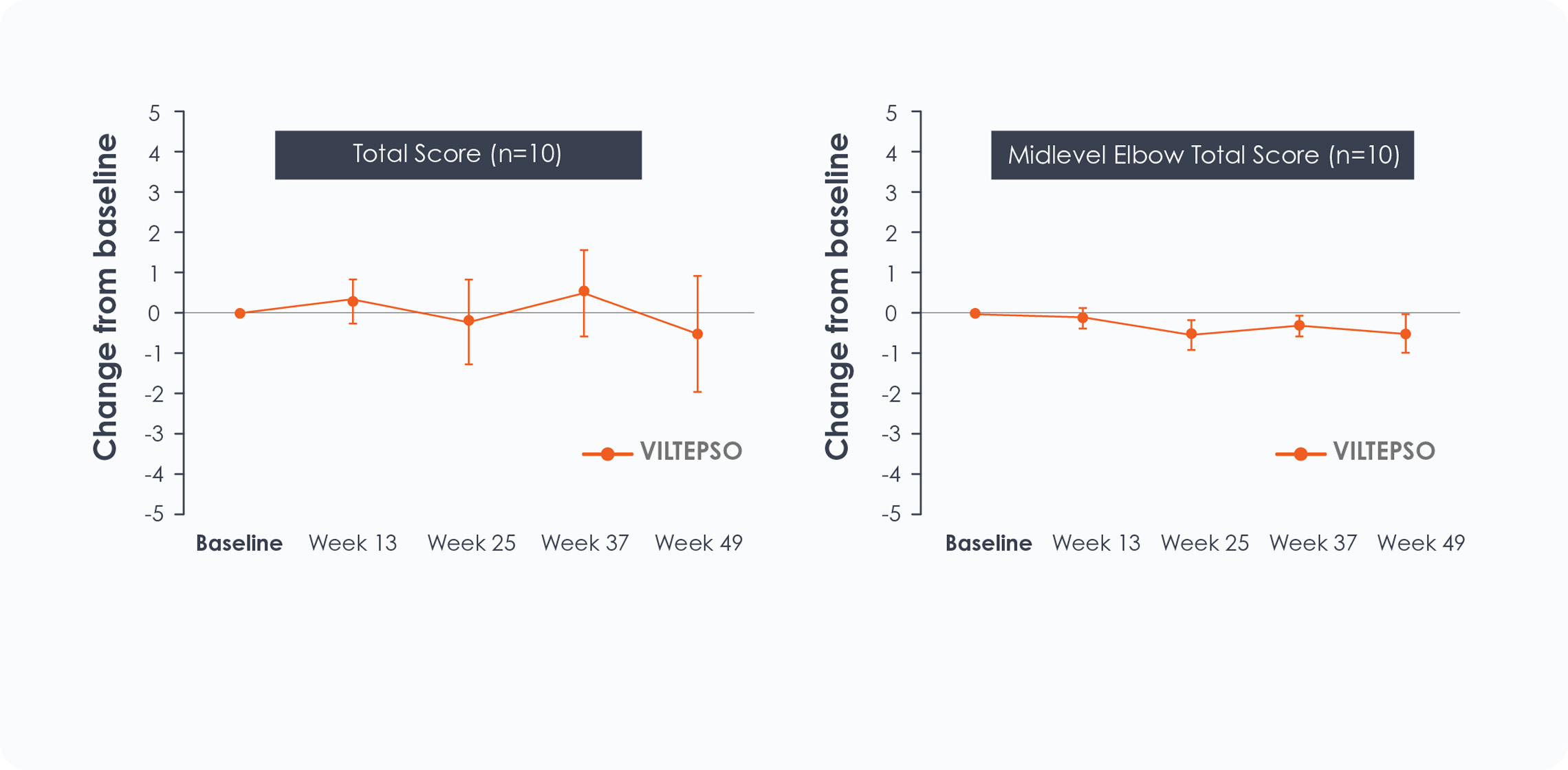
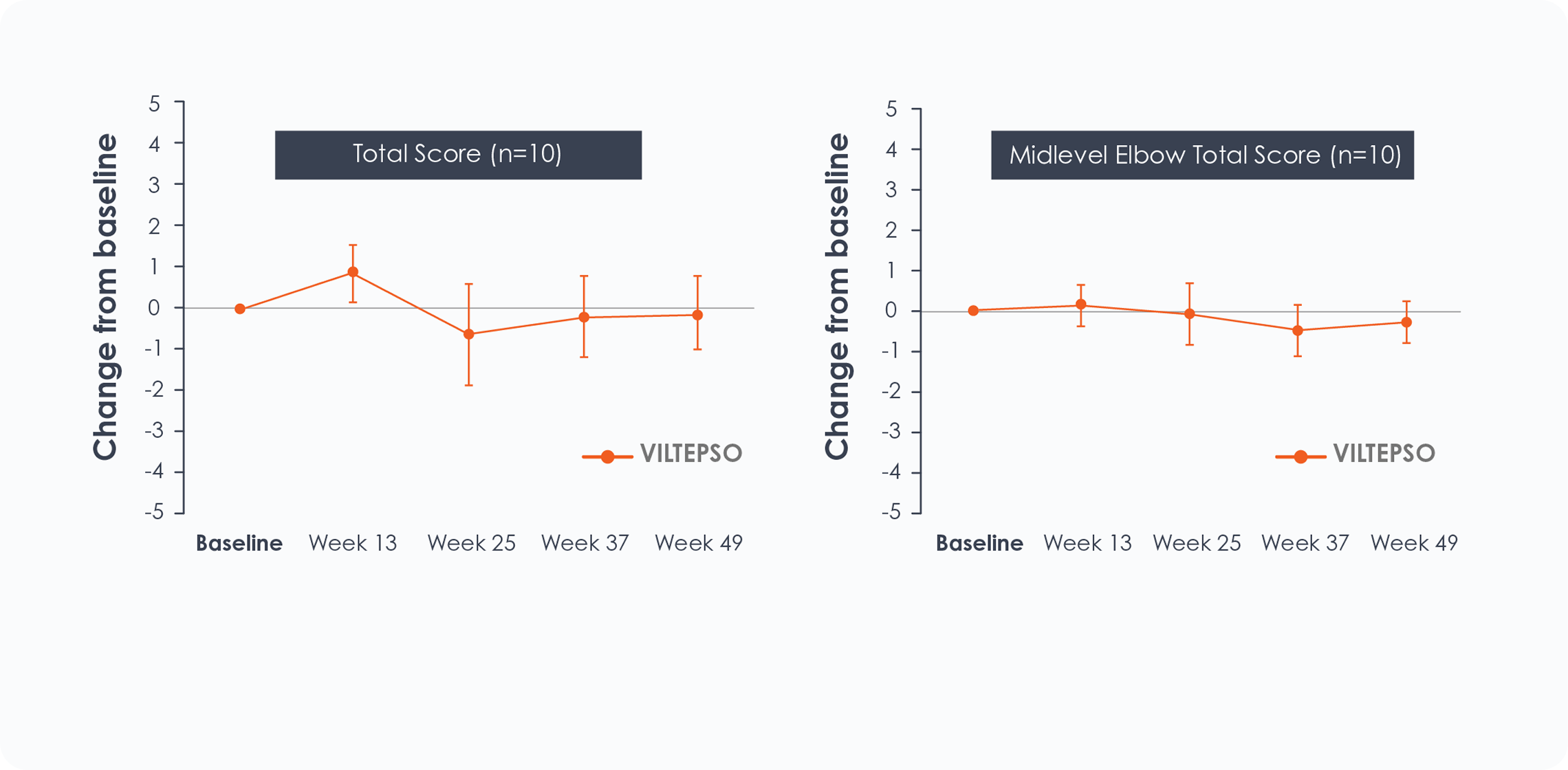
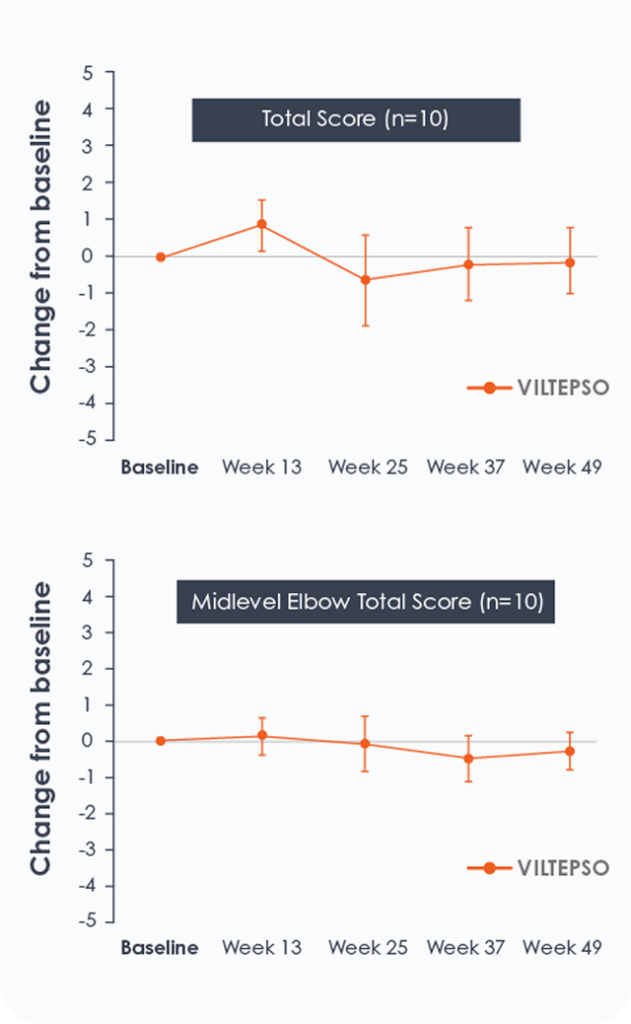
Total and midlevel elbow scores from PUL 2.0 were used to evaluate upper limb function in ambulatory and non-ambulatory patients.
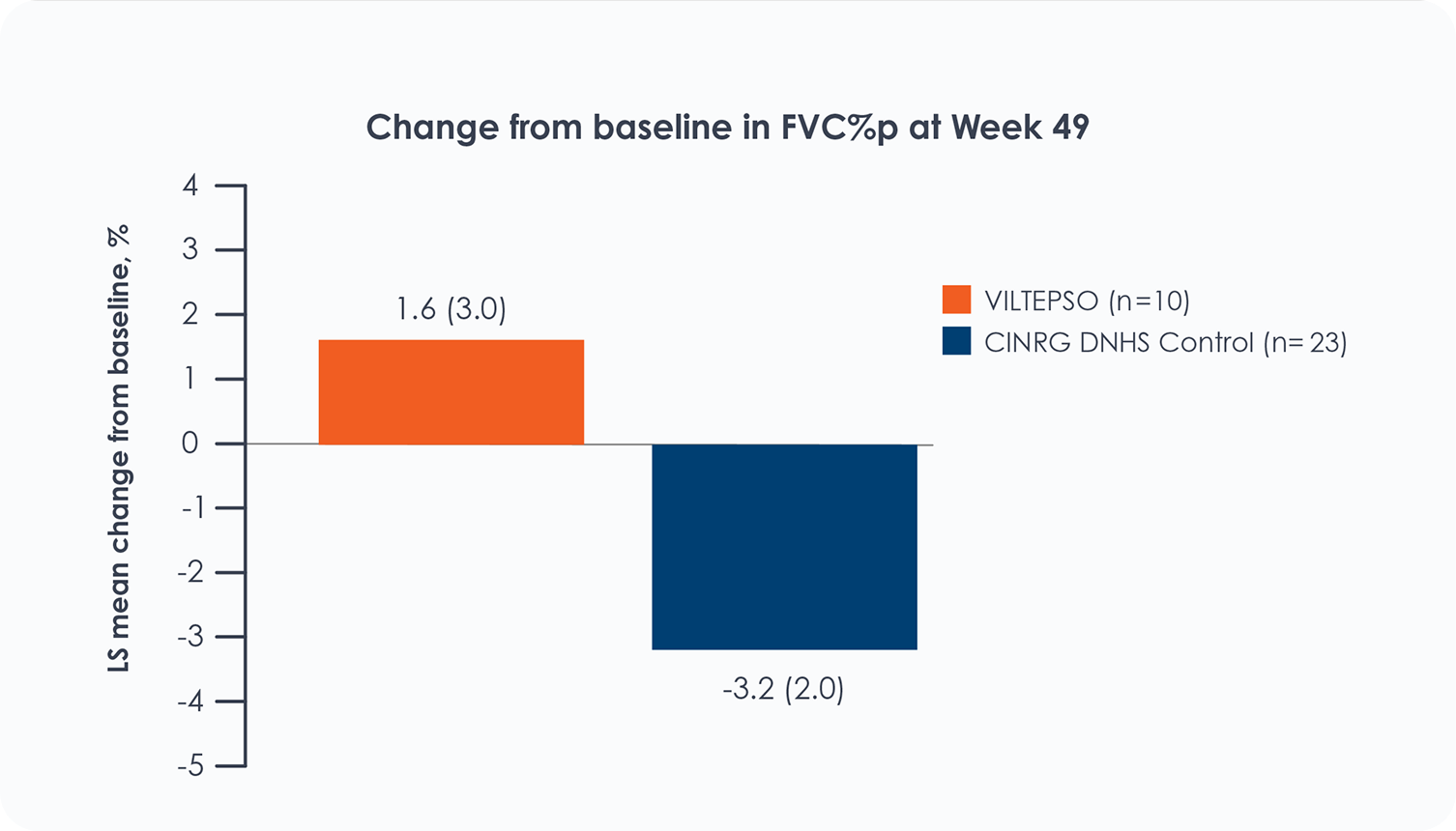
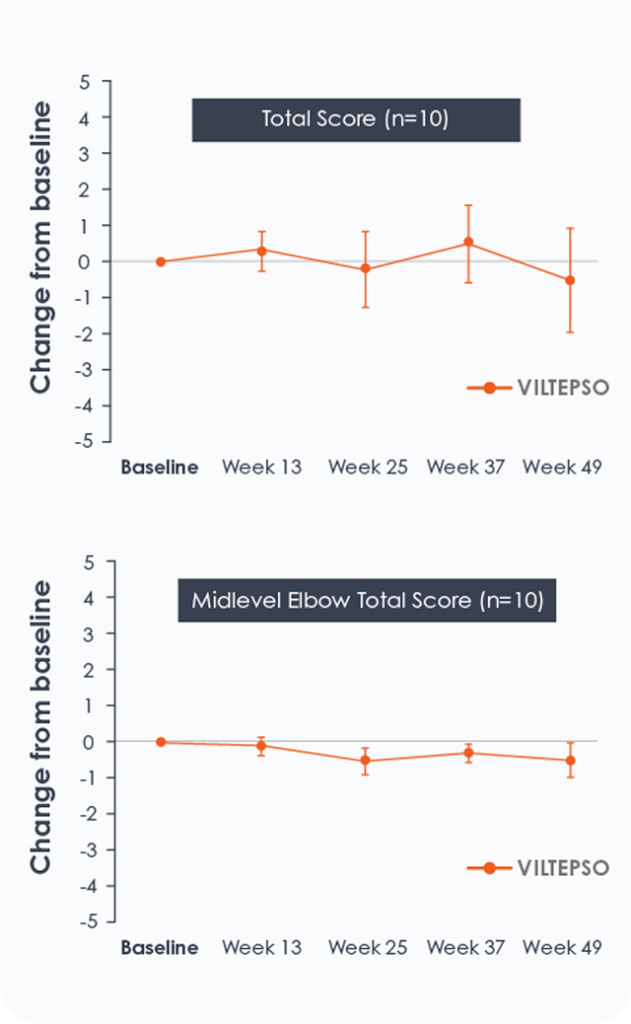
  • PUL 2.0 is a validated 42-point scale to evaluate upper limb functionality in individuals with DMD. Data was not collected for the natural history control cohort. Galactic53 study data are not included in the US Prescribing Information.
Line charts showing Performance of Upper Limb 2.0 scores over time in ambulatory and non-ambulatory DMD patients treated with VILTEPSO (viltolarsen) in the Galactic53 study.

Data presented as LS mean (standard error).

CINRG=Cooperative International Neuromuscular Research Group; DNHS=Duchenne Natural History Study; LS=least squares; PUL=Performance of Upper Limb

Galactic53 Safety Data

In the safety population, 95% (19/20) of participants reported TEAEs; all TEAEs were mild or moderate in severity. 

  • No participants discontinued VILTEPSO due to TEAEs
  • No serious adverse events or deaths occurred during the study
  • No induction of anti-viltolarsen or anti-dystrophin antibodies was observed in VILTEPSO patients
TEAEs in >1 participant VILTEPSO 80 mg/kg/wk N = 20*
COVID-19 infection6 (30)
Headache4 (20)
Hematuria4 (20)
Nasopharyngitis3 (15)
Upper respiratory tract infection3 (15)
Diarrhea2 (10)
Food poisoning2 (10)
Influenza2 (10)
Joint injury2 (10)
Pain in extremity2 (10)
Pyrexia2 (10)
Rhinitis2 (10)

*Includes both ambulatory and non-ambulatory participants.

TEAE=treatment-emergent adverse event

Pivotal Study of viltolarsen (VILTEPSO) in DMD

Pivotal Study

Explore results from the 24-week study of VILTEPSO in DMD patients.
Long-Term Extension Study of viltolarsen (VILTEPSO) in DMD

Long-Term Extension Study

Explore data from the four-year, open-label assessment of VILTEPSO.